
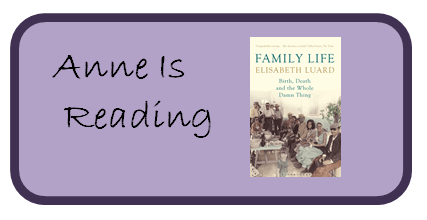
Family Life is a memoir by Elisabeth Luard of the life of her family when her children were young. The author is a food writer and her husband, who doesn’t feature a lot in this book, was also a writer and became a politician but he did own part of a nightclub with Peter Cook and they moved freely in London society. The events in this book took place towards the end of the last century.
The author married and immediately wanted to start a family. After some complications she had children and then they started to establish a life in the UK. The family had very little money, but not in the sense that ordinary people have very little money so there was always someone who would lend them a home or a family member who would help them out. Eventually they moved abroad, first to Spain and then to France, before returning to the UK as the children became older.
The author tells a story of what appears to be an idyllic childhood. She homeschooled the children initially and then they attended schools locally. They made friends with local people and ate local foods – the book contains recipes. Her cooking is very meat based and rustic and there are also descriptions of how they kept and killed animals for food.
The author had, if this book is accurate, an unusual childrearing style which involved giving the children responsibility and options which many would have considered above their age. They also had a lot of control of and input into whether or not they attended school and what they did. The author tried to treat her children as thinking, responsible people and some of her rules seem very unusual – for example, she says that she picked one child each day to receive punishment for anything wrong which any child did and that this actually worked very well.
The last part of this book is taken from the diaries of the eldest daughter Francesca and tells us how she contracted AIDS and how she chose to live and die with the condition. She is very much a young woman who lived life on her own terms, which was probably as a result of her unusual upbringing.
I thought that this book was interesting but very possibly an idealised view of the childhood of her children. I have my doubts about whether it all worked as well as she states here but maybe I am being cynical. I also thought that the family was much more privileged than they are prepared to acknowledge. It was very readable and the part about their daughter was very moving.
 Anne Is Reading