
Erik Larson writes “popular history”. That is, history for people like myself who are fascinated by the past but who don’t need to wade through a lot of details when trying to get a picture of what has happened. He writes about a range of subjects – here is a review of a book about the development of radio in Edwardian Britain and here is a review of his book about the home life of Churchill during WW2. I have also read books by him about the sinking of the Lusitania, a great storm and the beginning of weather forecasting, and a World Fair in Chicago. I have enjoyed all of these books even though I wasn’t always familiar with the subject matter or even aware that I would find it interesting.
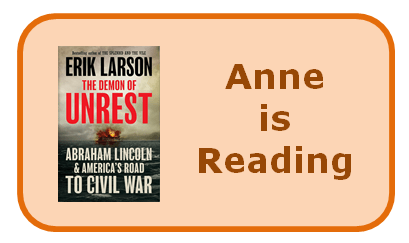
The Demon of Unrest is the story of the period between when Abraham Lincoln was elected and when he took office – it is also the beginning of the American Civil War and the book concentrates on the shelling of Fort Sumter in South Carolina. I know very little about American history so I found this book fascinating because I genuinely didn’t have a clue what was going to happen next.
The author explains how Lincoln was elected and the threats he came under before his inauguration. He also explains the positions of the Northern and Southern states and why they were divided. He makes it personal, using diaries and documents of the time, by introducing us to key players on both sides in South Carolina and explaining why they made the decisions they did and what impact it had nationally. All these strands link together well and the story is one of misunderstandings, entrenched positions, ineptitude, and people who felt constrained by their traditions and moral code. There were also some alarming similarities to the stormin of the Capitol building in 2020.
I listened to this book on audio where it was narrated by Will Patton. I did have a little problem with the narration as the voice actor has a distinctive accent from the Southern states of America. This meant that he tended to drop his voice at the end of sentences and not always enunciate his words clearly so that I had to concentrate harder to listen to the narration than I normally do. I was, however, so gripped by the story and the way that the author has told it that I have now acquired the physical book so that I can read it again. Of course, now that I have read something about the American Civil War I shall need to read more….
 Anne Is Reading