
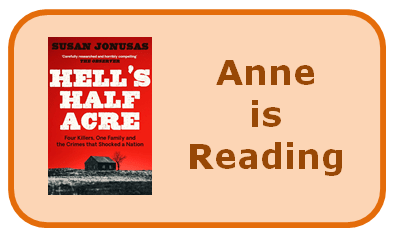
In 1873 the American frontier was filled with small new towns, farmers starting from scratch having been granted land, and people trying to eke out a living in a hostile environment. Lawlessness was rife but there was some peace keeping and the court system was operational. The story that Susan Jonusas tells in Hell’s Half Acre is set in Kansas at this time and is an interesting look at the society of the period as well as the activities of the Bender family.
The Benders lived in an isolated cabin which was situated on a mountain pass. They made their money from the people travelling that way who paid for meals, accommodation and goods which they stocked in a makeshift store. They also killed isolated travellers and stole their possessions, storing the dead bodies beneath their floors and buried in the nearby woods. When they feared discovery the family disappeared and investigators tried, but ultimately failed, to track them down.
What is fascinating about this story is what it shows us about life at this time. Communications were poor and people didn’t always know where others were. Many accidents happened and people did die with their bodies not being found. Many inhabitants used assumed names and hid their backgrounds. The population was transient.
What is also interesting is how much the society at the time resembles modern society. Newspapers were very popular and the story of the killings spread quickly by the printed word, and by rumours and gossip. Sightseers flooded to the cabin, interfered with the investigation and began removing items as souvenirs. There was considerable pressure on those enforcing the law to find the culprits and some arrests were made because of mistaken identity.
This is an excellent read. The author doesn’t hide the awfulness of the crimes or of the conditions in which so many lived but she also shows how the landscape and society created the opportunity for the family to operate.
 Anne Is Reading