
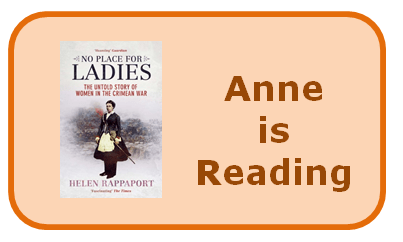
A surprising number of women went to war with the men in the Crimea. Helen Rappaport’s book No Place for Ladies tells the story of some of them.
Officers could bring their wives to battle with them, although there were issues about how many could travel with each regiment and also what happened to the women if their soldier husbands died. There were further complications among the other ranks where the women who travelled with them were not always their wives and thus the army took no responsibility for them in the event of death. Their lives in the Crimea were tough but the women who remained behind in the UK had a much harder time and were often left destitute.
Women came forward to be nurses, many with Florence Nightingale but others with religious orders. Many of them were kind souls but many were not and their living conditions were also difficult. Some women, Mary Seacole for example, set up trading posts and sold necessary items to the soldiers. Some women sold other women to the men for sex. There were tourists who came to the war too, some of whom were women, and society arranged balls and events for soldiers and their wives. Other women acted as servants and undertook menial tasks including laundry and cooking.
This is a fascinating account of something which I didn’t know a lot about before I read this book. The stories of what women did and how they survived are told in extracts from diaries and published accounts written afterwards. The author tells the stories of each reason for coming to the Crimea, how the women lived, and what happened to many of them.
This is an easily accessible history book which I enjoyed a lot. It reveals stories which are not well known and introduces us to women who lived difficult and often courageous lives on the fringe of war. I listened to this book on audio where it was read clearly and well by Eunice Roberts.


One thought on “Women go to war”